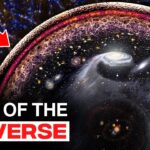
One striking new study, just published in November 2025, revisits the evidence for cosmic acceleration, suggesting that the universe’s expansion may be slowing rather than speeding up. Professor Young-Wook Lee led the team to re-examine Type Ia supernova data and the properties of their host galaxies. By correcting subtle biases associated with stellar age and population, they find that distant supernovae are less dim compared to what was previously estimated-and that the current expansion rate may have entered a decelerating phase. If confirmed, this claim would be another major course correction for cosmology.
Why this question matters
Since the late 1990s, astronomers have believed that the universe’s expansion is accelerating, driven by a mysterious component called dark energy. That idea reshaped cosmology and earned a Nobel Prize. The possibility that dark energy is not constant but weakens with time would change predictions about the universe’s future. Instead of endless acceleration and eternal cooling, a weakening dark energy could slow the growth of space and, in extreme scenarios far in the future, open the door to very different cosmic fates. The new paper does not claim an immediate “Big Crunch,” but it raises the stakes for testing dark energy models.
What did the researchers do differently?
The study focuses on Type Ia supernovae, which serve as “standard candles” for measuring cosmic distances. The basic method compares how bright a supernova appears with how bright it should be; dimmer appearance at large distances was the original evidence for acceleration. Lee’s team looked carefully at the galaxies that host these supernovae, their ages, star populations and other properties, and found a systematic effect: older host systems and certain stellar populations alter supernova light in ways that can make them seem dimmer if not properly corrected. By applying new calibrations that account for these host effects, the team recalculated distances and derived a different expansion history for the nearby universe.
Is this a complete refutation of dark energy? Not yet.
It is also crucial to underline that the paper challenges the simplest model of a constant dark energy but does not instantly overthrow the entire framework. The result is provocative, and the statistics reported are strong, but cosmology rests on multiple independent measurements: supernovae, galaxy clustering, baryon acoustic oscillations, cosmic microwave background data, and more. Many groups will now test the new corrections and compare results against other probes. Independent confirmation is absolutely necessary before scientists can accept that cosmic expansion is slowing.
Theories that could fit a weakening dark energy
If dark energy does evolve over time, several physical ideas could explain it. One possibility is a dynamic field-sometimes called quintessence, that has a time-varying energy density. Another notion involves couplings between dark energy and dark matter, or new light particles whose collective energy density varies as the universe expands. Each idea stamps different fingerprints in observables such as the growth of cosmic structure and minute variations in the cosmic microwave background. Future measurements will concentrate on such fingerprints to bound the causes.
What the community will do next
The astronomy community will immediately react. Teams working with large surveys-including the Dark Energy Spectroscopic Instrument, the Vera C. Rubin Observatory, and NASA’s Roman Space Telescope-will compare their independent measurements against the new result. Observers will check for the same host-galaxy bias in other samples, and theorists will refine models that allow evolving dark energy. The next few years are a testing ground: the effect will either be confirmed across multiple probes or it will fade as a subtle data artifact. Either outcome advances our understanding.
Watch to know more
How to think about it as a reader
This is science in action: a bold idea backed by careful analysis that asks the community to rethink an important result. Extraordinary claims require clear, repeatable evidence. Until many independent groups reproduce the finding, treat it as an exciting hypothesis-not a final verdict. Whether dark energy is constant or changing, the result is a strong reminder that measurements and systematics matter deeply in modern cosmology.