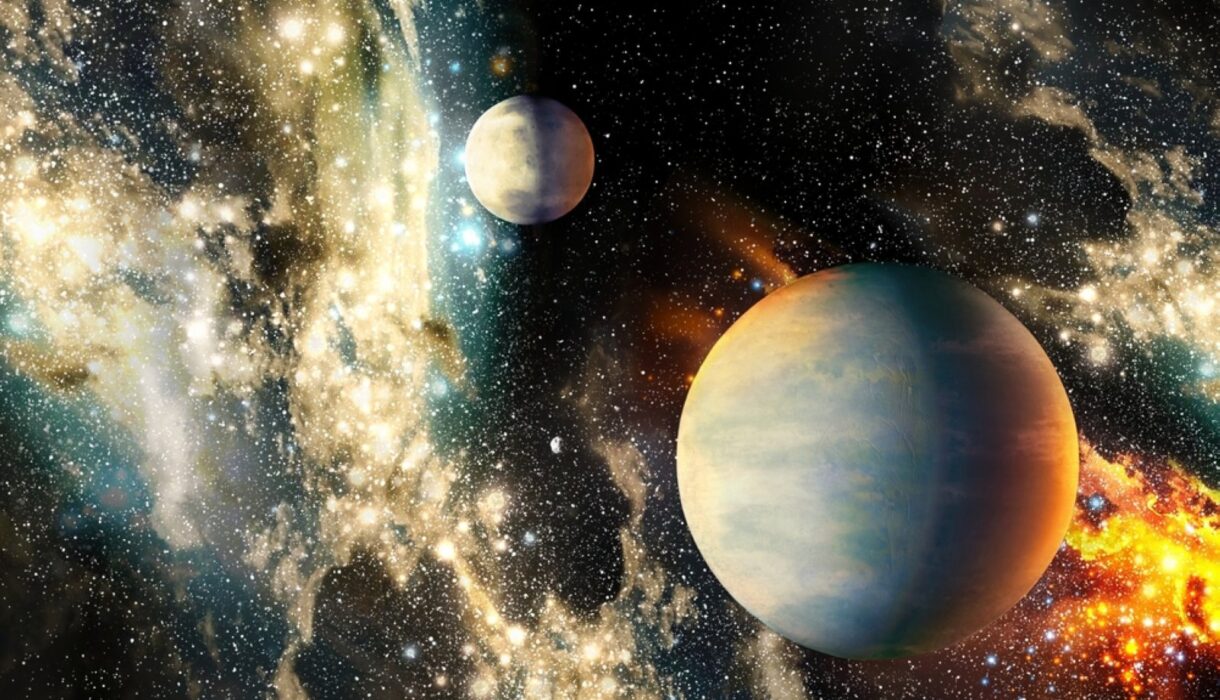

A team of astronomers, led by the Turkish researcher Selçuk Yalçınkaya, has just announced a big find: four new exoplanets, one of which may lie in a star’s habitable zone. With this discovery, a contribution is being made not only to exoplanetary science as a whole but also to the growing importance of Turkey within it. According to a press release from Anadolu Agency, the planets circle three different stars, and the one that may be within the habitable zone is likely to be of especial interest in the hunt for alien worlds.
How They Discovered the Planets
The confirmation of the planets was made by the astronomers by combining two potent methods. First, they used the transit method, which looks for slight, regular dips in a star’s light as a planet crosses in front of it. Then they complemented this with the radial velocity method, which measures small wobbles in a star’s motion caused by the gravitational tug of an orbiting planet.
For accurate readings, the team carried out observations of stars with both Turkish and international telescopes. Some of the data were collected using the Turkish National Observatory and some by big-name international sites. Combining these measurements, all four planets could be confirmed with reasonable confidence.
What the Four Planets Are Like
Here is a breakdown of the newly discovered planets:
- Two of the planets orbit a star known as TOI-5799. The two are what scientists refer to as “super-Earths,” meaning they are a bit larger than Earth but not quite the size of gas giants.
- The third planet orbits another star, TOI-1743; it is also a super-Earth, but it is on a very tight orbit, so it probably gets quite a lot of heat from that star.
- The planet, called TOI-6223 b, would be more like a “mini-Neptune”, not a rocky planet, but decidedly not a huge gas giant either.
Of these, the most interesting is TOI-5799 c, which sits on the inner edge of its star’s habitable zone. That suggests it gets a radiation level from its star that could host liquid water depending on its atmosphere.
Why TOI-5799 c might be special
Being in or near a habitable zone doesn’t mean a planet is habitable, but it’s a strong sign that it’s worth studying further. The team estimates that TOI-5799 c could have a surface temperature of around 63°C (145°F) given an atmosphere of a certain type. That’s well above Earth’s average, but not so extreme that life as we know it is impossible-especially with clouds, water vapor, or a protective atmosphere to help ward off the worst of it.
Because of this, the team led by Yalçınkaya would like to make future follow-up observations with the James Webb Space Telescope. Such a possibility with JWST includes detecting water vapor and methane in the atmosphere of the planet, which both might prove to be biosignatures.
Implications for Astronomy
This finding has several important scientific implications:
- Expanding the Search for Life
It is always exciting to find a super-Earth in the Habitable Zone. It adds another potential target to the catalog of “interesting” exoplanets where life might exist. - Improving Detection Confidence
This shows strong rigor since the Turkish team used both transit and radial velocity methods; by using two approaches, it reduces the possibility of false positives, and using multiple telescopes further enhances the reliability of the data. - Encouraging International Scientific Cooperation
But this is not simply a Turkish discovery, as it also involves international observatories and partnerships. It shows how truly global astronomy work really is and how scientific leadership can come from many countries, not just the usual big players in the field. - Advancing Understanding of Super-Earths
Super-Earths are among the most common types of exoplanet, but we still don’t fully understand their atmospheres, internal structure, or habitability. Every new super-Earth helps refine our models of what these planets are made of and how they form.
Challenges Ahead
But there’s still much work to be done amid the fanfare: First, the estimate for the possible habitable planet’s temperature depends a lot on the assumptions about its atmosphere-we don’t know what it is made of. Confirming an atmosphere with JWST or other telescopes will be hard work and will take time.
There’s another challenge: the host stars themselves. M-dwarf and other small stars-if that’s what these are-can be very active, with flares and radiation that could strip away a planet’s atmosphere or make conditions harder for life.
Finally, even if TOI-5799 c is somewhat habitable, “habitable zone” does not guarantee a planet has liquid water or biology. It just means that it might, and many other factors need to align.
What's Next for the Research Team
he team of Yalçınkaya intends to apply for observation time with more powerful telescopes, including JWST and future ground-based instruments, and to monitor the stars for longer, thereby improving their planet mass and orbit estimates. Part of the strategy involves searching for more planets around TOI-5799 and the other host stars to determine whether these systems are unusually rich in small planets or just typical of what we expect. They also advocate for more local investments in Turkish observatories, to develop more capacity for exoplanet science
Watch to know more
Why This Discovery Matters to Us
This discovery reminds everyday readers that our place in the universe is part of a much bigger story. It gives reason to hope: maybe one of those newly found worlds might be “just right” for water, or even life. For students and aspiring scientists in Turkey and everywhere, it’s a sign that you can be leading meaningful space-science work. It also reinforces how space, our understanding of it, is global, and how institutions from all over can contribute to answering the biggest questions: Are we alone?