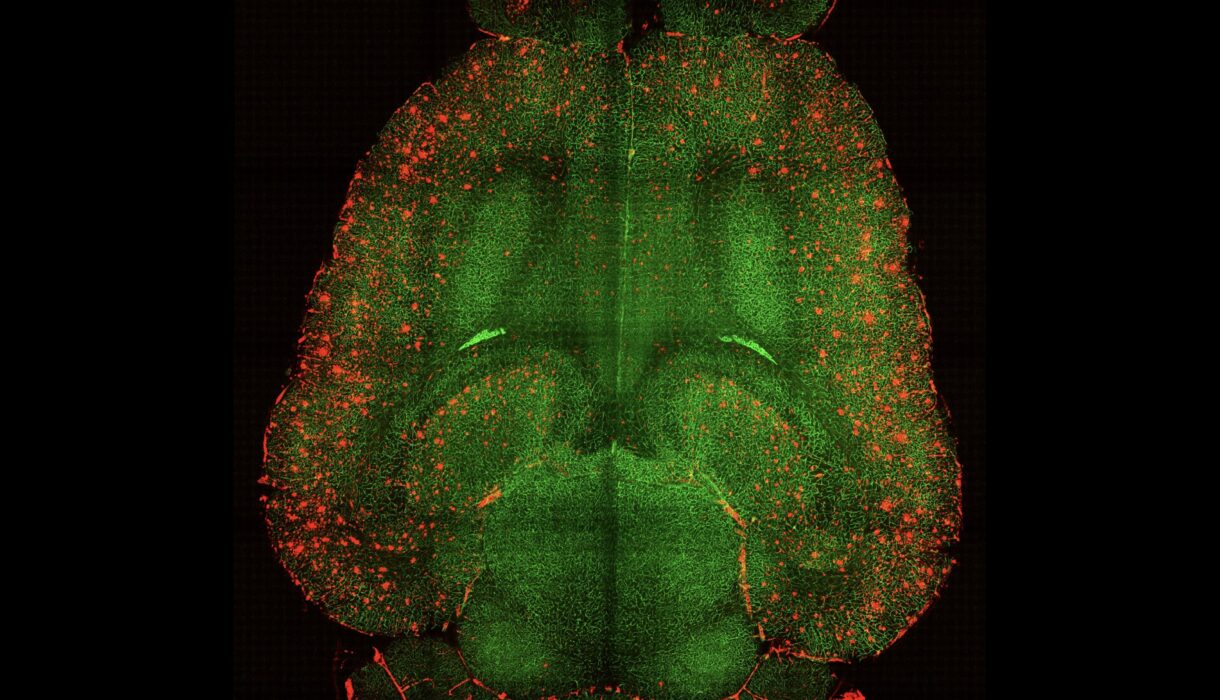

One of the most troubling aspects about neurological diseases such as Alzheimer’s is memory loss. For decades, a way to slow down, or even reverse, cognitive decline has been sought after by researchers. In November 2025, a breakthrough study revealed that one newly discovered brain molecule was able to reverse memory loss in mice, thus pointing toward potential therapies for neurodegenerative diseases in humans.
The study was conducted by a team of neuroscientists at the University of California, Berkeley, led by Dr. Susan Thompson. They identified a molecule that plays a key role in the formation and retrieval of memories, which they termed NeuroRegen-1. In experiments where mice showed induced memory loss, treatment with NeuroRegen-1 resulted in significant improvement in their memory functions within a few weeks.
How the Molecule Works
NeuroRegen-1 is naturally produced in the brain but tends to decrease with age or due to neurodegenerative conditions. The molecule is involved in strengthening synaptic connections–the communication points between neurons. Stronger synapses are essential for learning and memory.
The researchers administered NeuroRegen-1 to the hippocampus, the region of the brain where memories are stored. They found evidence that this type of treatment led to an increase in new synapses and the repair of damaged ones. This led to treated mice performing better in some memory tests, like navigating mazes or identifying familiar objects, compared to untreated mice.
Dr. Thompson explained, “NeuroRegen-1 appears to rejuvenate the brain’s memory circuits. The treated mice not only regained lost memories but also learned new tasks faster than before.”
Why This Discovery Is Important
Memory loss is one of the central symptoms of Alzheimer’s and other dementias. Today, symptom-modifying therapies are available, but none can reverse the decline in memory. The discovery of NeuroRegen-1 is so important because it proves that memory loss can be transient and does not need to be permanent.
This finding also gives one a better understanding of the storage and retrieval of memory. NeuroRegen-1 may act as a model to develop drugs that could actually mimic its effects in humans. “This research gives hope to millions of patients and their families, challenging long-standing assumptions that lost memories cannot be recovered,” Dr. Maria Chen, a neuroscientist not directly involved in the study, said.
Experiments and Results
To confirm NeuroRegen-1’s effectiveness, various tests were performed by the research team:
- Maze Test: Mice treated with the molecule navigated a complex maze more efficiently and finished in less time compared to control mice.
- Object Recognition: The treated mice were able to recognize familiar and new objects, demonstrating restored short-term memory.
- Long-Term Memory: When tested weeks after treatment, the mice had retained improved performance, showing that the recovery of memory was lasting.
They also measured the brain activity of treated mice. Imaging techniques showed that the neural activity in the hippocampus and prefrontal cortex had increased. These regions are critical for memory consolidation and retrieval.
Potential Implications for Human Health
While the mouse results are encouraging, their translation into humans needs to be undertaken with a degree of caution. The human brain is much more complex, and safety, first and foremost, is a serious issue. But the researchers are optimistic: NeuroRegen-1 might finally lead to treatments for Alzheimer’s, age-related memory loss, and other cognitive disorders.
It may also be utilized in the recovery of lost memories due to brain injuries or stroke. If successful in humans, NeuroRegen-1-based therapies could improve the quality of life in millions around the world.
Furthermore, such a discovery will spur scientists to find other molecules with similar regenerative properties. The combination of such molecules with other therapies could create a multi-pronged approach to treating memory loss.
Challenges Ahead
There are several challenges despite the potential. First, scientists have to make sure NeuroRegen-1 is safe for long-term administration. Over-activation of synapses could result in abnormal neural activity, possibly leading to seizures or other forms of adverse side effects.
Second, it would need to be appropriately delivered in humans; direct injection into the hippocampus could work for mice, but non-invasive methods like nasal sprays or targeted nanoparticles would likely be needed for humans.
Third, one has to understand how the molecule acts in coordination with other brain chemicals. The brain is highly interconnected, and changing one type of molecule could alter many other functions.
Future Directions
The research team intends to continue testing NeuroRegen-1 in larger animals before considering human clinical trials. They also wish to investigate how combining the molecule with lifestyle interventions, such as exercise and cognitive training, might improve memory recovery.
Besides, the researchers investigate whether the molecule, if taken early in life or at an early stage of dementia, can delay the onset of memory loss. This preventive approach could alter the way neurological diseases are treated.
Dr. Thompson concludes, “We are at the beginning of a new era in memory research; NeuroRegen-1 is only the first step toward treatments that could restore lost memories and help people live fuller, healthier lives.”
Watch to know more
Conclusion
NeuroRegen-1’s discovery is a landmark finding in the annals of neuroscience. For the first time, the effects of memory loss have been demonstrated to be reversible in living animals. Though clinical applications may still be in their infancy, it offers great hope for millions globally who suffer from Alzheimer’s and other memory disorders. This breakthrough with NeuroRegen-1 might reshape the way the world understands, prevents, and treats memory loss with continued studies of this molecule and similar ones.